
Navigating Maryland Auto Insurance Fund Careers and Benefits
Maryland Auto Insurance Fund Careers and Benefits offer a stable professional path within a quasi-governmental agency dedicated to providing vehicle coverage for high-risk drivers. These roles combine the structured environment of public service with the technical demands of the insurance industry, providing employees with unique pension options and comprehensive health coverage.
- •The Unique Identity of Maryland Auto
- •The "Last Resort" Misconception: Why It’s Actually a Hidden Gem
- ◦How Maryland Auto Insurance Fund Careers and Benefits Compare to Private Roles
- ◦Maryland Auto Insurance Fund Careers and Benefits: A Detailed Breakdown
- •Core Career Paths Within the Organization
- ◦Claims Adjusting and Investigation
- ◦Underwriting and Risk Assessment
- ◦Information Technology and Data Analytics
- •The Benefits of Public Service Stability
- •Professional Development and Growth
- •The Cultural Environment of the Maryland Office
- •Is This the Right Move for You?
- ◦Frequently Asked Questions
While many job seekers overlook the “residual market” sector, we find that this specific organization provides a rare blend of job security and mission-driven work. By exploring the nuances of these positions, we can see how they differ from corporate insurance giants and why the compensation structure often surprises those coming from the private sector.
The Unique Identity of Maryland Auto
To understand the professional landscape here, we first have to look at what this organization actually is. Formed by the Maryland General Assembly in 1972, it isn’t a private insurance company in the traditional sense, nor is it a standard state agency. It exists in a “quasi-governmental” space. This means that while it operates on the premiums it collects—rather than taxpayer dollars—it still adheres to many of the structural benefits and oversight rules of the State of Maryland.
For someone looking at Maryland Auto Insurance Fund Careers and Benefits, this distinction is everything. It influences the pace of work, the types of claims you handle, and the long-term financial security of your position. When we analyze the career trajectories of people in this field, we often see a level of longevity that is becoming increasingly rare in the high-turnover world of private insurance. You aren’t just selling policies; you are providing a safety net for the state’s transportation ecosystem.
The organization serves as the “insurer of last resort.” This means the customers you interact with are often those who have been turned away by other carriers. According to research on cheap car insurance maryland, drivers who cannot find coverage elsewhere rely on this fund to stay legal on the road. From a career perspective, this creates a challenging and intellectually stimulating environment for claims adjusters and underwriters who must navigate complex risk profiles every day.
The “Last Resort” Misconception: Why It’s Actually a Hidden Gem

There is a persistent myth that working for a residual market fund is somehow “lesser” than working for a brand-name national carrier. We’ve heard it before: the idea that the technology must be outdated, the cases must be repetitive, or the office environment must be stagnant. In our observations, the reality is quite the opposite. Because the risk pool is more complex, the staff often develops a sharper set of skills than those handling “preferred” drivers who rarely have accidents or legal complications.
An overlooked detail our team often encounters is the sheer variety of the workload. In a standard private firm, you might be siloed into a very specific, repetitive type of claim. At Maryland Auto, you are dealing with the outliers. This requires a deeper understanding of Maryland state law, more creative problem-solving, and a more empathetic approach to customer service. It is a “masterclass” in insurance fundamentals because you are seeing the cases that the rest of the industry is afraid to touch.
The “last resort” label applies to the policyholders, not the employees. The professional standards are high, and the regulatory oversight ensures that the workplace remains disciplined and ethical. If you are coming from a background like the Auto Club Enterprises Insurance Group Careers Review might suggest, you will find that the focus here shifts from aggressive sales targets to high-integrity compliance and public service.
How Maryland Auto Insurance Fund Careers and Benefits Compare to Private Roles
When we compare these roles to the broader market, the differences in the “total rewards” package become clear. Private carriers often lead with high base salaries or performance bonuses, but they frequently lag in long-term retirement security. Maryland Auto, by contrast, offers access to state-linked benefits that are becoming relics in the corporate world.
For example, the presence of a defined benefit pension plan is a massive differentiator. Most modern insurance jobs have moved entirely to 401(k) models where the risk falls on the employee. Here, the hybrid nature of the organization allows for a more traditional, secure retirement path. This is a major reason why the average tenure at the organization tends to be measured in decades rather than years.
Maryland Auto Insurance Fund Careers and Benefits: A Detailed Breakdown
The following table summarizes how the core components of these careers stack up against the typical private sector experience we see in the insurance industry.
| Feature | Maryland Auto (MAIF) | Standard Private Carriers |
|---|---|---|
| Retirement Structure | Pension & Supplemental Savings | 401(k) with Matching |
| Work-Life Balance | Fixed Hours / Public Holidays | High-Pressure / Target-Driven |
| Risk Complexity | High (Residual Market) | Standard to Preferred |
| Career Focus | Public Service & Compliance | Profitability & Growth |
| Job Security | High (Legislative Mandate) | Moderate (Market Dependent) |
Core Career Paths Within the Organization
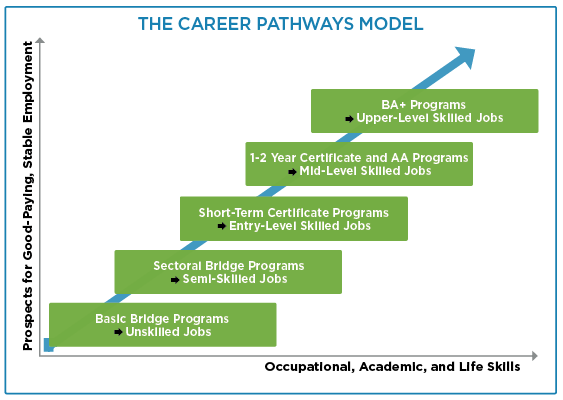
If you are considering a move, you aren’t limited to just “selling insurance.” In fact, because Maryland Auto doesn’t use a traditional captive agency force in the same way some national brands do, the internal roles are heavily focused on the technical and operational side of the business.
Claims Adjusting and Investigation
The claims department is the heartbeat of the organization. Because the drivers insured here are high-risk, the adjusters must be incredibly diligent. We often see that adjusters here become experts in fraud detection and liability disputes. They work closely with the Special Investigative Unit (SIU) to ensure that the fund—and by extension, the state’s insurance pool—is protected from illegitimate claims. It’s a role that requires a thick skin but offers immense satisfaction for those who enjoy “detective” work.
Underwriting and Risk Assessment
Underwriters at Maryland Auto operate under a specific set of rules. Unlike private carriers who can “cherry-pick” the best drivers, these underwriters are looking to see if a driver meets the statutory requirements for the fund (such as having been rejected by two private companies). This requires a meticulous eye for detail and a deep understanding of the Maryland Insurance Administration’s regulations. If you’ve looked into the State Farm Auto Insurance Careers Application Guide, you’ll notice that while the core skills are similar, the “why” behind the underwriting decision is much more focused on eligibility than on maximizing profit margins.
Information Technology and Data Analytics

Modernizing a quasi-governmental agency is no small feat. The IT teams here are tasked with maintaining robust systems that can handle complex billing, policy management, and data reporting to the state. We’ve observed that these roles offer a lot of autonomy. You aren’t just a cog in a global machine; you are often part of a smaller, more agile team making decisions that directly affect how Marylanders interact with the fund.
The Benefits of Public Service Stability
We cannot talk about Maryland Auto Insurance Fund Careers and Benefits without highlighting the “hidden” perks of the public service model. While the private sector is often characterized by “at-will” volatility and frequent reorganizations, this organization provides a much more stable environment.
The health insurance options are typically tied to the State of Maryland’s plans, which are known for their comprehensive coverage and lower-than-average premiums. For a family, this can equate to thousands of dollars in “invisible” salary that isn’t reflected in the base pay. But it isn’t just about the money. The culture tends to respect the 40-hour work week. In an era of “quiet quitting” and burnout, the ability to leave work at the office is a benefit that many veteran insurance professionals eventually prioritize over a slightly higher private-sector bonus.
Another factor is the generous leave policy. Employees usually accrue vacation, sick leave, and personal days at a rate that outpaces most entry-level corporate roles. Because they follow the state holiday calendar, staff also enjoy more paid days off throughout the year than their counterparts at national firms.
Professional Development and Growth
One thing we’ve noticed is that Maryland Auto invests heavily in its people. Because the organization is smaller than a giant like GEICO or Progressive, there is often more cross-training. An underwriter might get exposure to the legal side of the business, or a customer service representative might be mentored into a claims role.
They often provide support for professional designations like the CPCU (Chartered Property Casualty Underwriter) or the AIC (Associate in Claims). These certifications are the “gold standard” in the industry. By earning them while working in the unique environment of the residual market, you make yourself an incredibly valuable asset. If you ever decided to move back to the private sector, perhaps exploring something like Auto Owners Insurance Group Careers and Hiring Process, you would do so with a level of technical expertise that few others possess.
The Cultural Environment of the Maryland Office

The physical and social environment of the organization is distinctly “Maryland.” Most of the operations are centered in the Annapolis and Baltimore areas. This means the workforce is deeply rooted in the local community. We find that this creates a sense of camaraderie that is often missing in remote-first global corporations.
There is a shared understanding of the local geography, the specific challenges of Baltimore traffic, and the legislative climate in Annapolis. This local expertise is actually a professional advantage. When an adjuster is looking at a claim from a specific intersection in Silver Spring or a rural road on the Eastern Shore, they likely know the area. That “home-field advantage” makes the work more intuitive and less clinical.
Is This the Right Move for You?
Deciding to pursue Maryland Auto Insurance Fund Careers and Benefits requires a shift in mindset. If you are driven solely by the pursuit of the highest possible commission or the fastest climb up a corporate ladder in a 100,000-person company, this might not be your first choice.
However, if you value a career where you can become a true subject matter expert, where your job security is backed by state mandate, and where your retirement is secured by a pension rather than the whims of the stock market, this is a path worth walking. We see it as a “marathon” career rather than a “sprint.” It’s for the professional who wants to do good work, be treated fairly, and have a life outside of the office.
The work is challenging because the risks are higher, but that is exactly what makes the experience so valuable. You aren’t just processing paperwork; you are solving the problems that the rest of the industry has given up on. That, in our view, is a career worth having.
Frequently Asked Questions
Do I need to be a Maryland resident to work there?
While many roles are based in Maryland, residency requirements can vary by position. However, since the fund serves Maryland drivers specifically, most employees find it beneficial to live within the state to understand the local market and commute to the Annapolis or Baltimore offices.
Is the Maryland Auto Insurance Fund a state agency?
It is a quasi-governmental agency. It was created by the state legislature, but it does not receive state general fund money. It is funded by premiums and investments, yet its employees often receive state-style benefits.
What is the most common entry-level role?
Many people start in Customer Service or as a Junior Claims Adjuster. These roles provide a foundational understanding of the “residual market” and offer a clear pathway into more specialized underwriting or investigative positions.
How does the pension plan work?
Typically, employees participate in the Maryland State Retirement and Pension System. This is a defined benefit plan, meaning your retirement income is based on your years of service and salary, providing a guaranteed monthly check, which is quite different from a 401(k).